Seismic engineering in Newcastle upon Tyne addresses the critical need to design, assess, and retrofit structures and infrastructure for earthquake resilience, even in a region historically perceived as having low seismicity. While the UK is not located on an active plate boundary, intraplate earthquakes do occur, and Newcastle's industrial heritage, dense urban fabric, and growing portfolio of tall buildings demand a proactive approach. This category encompasses the full spectrum of seismic risk management: from advanced ground motion characterisation through seismic microzonation to the detailed structural countermeasures inherent in base isolation seismic design, and the critical geotechnical evaluation provided by soil liquefaction analysis. The overarching goal is to safeguard life, protect economic investment, and ensure operational continuity for essential facilities in the event of a rare but credible seismic event.
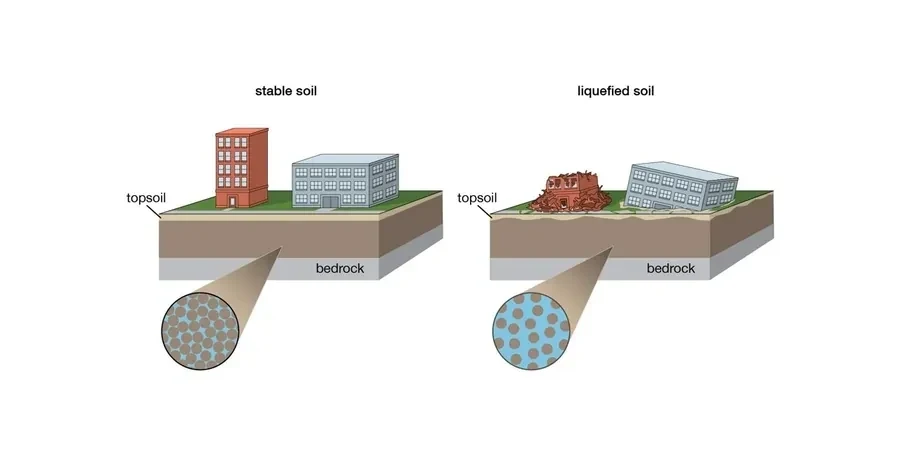
Newcastle's geological setting is a primary driver for its specific seismic risk profile. The city straddles the River Tyne, underlain by a complex sequence of Carboniferous Coal Measures—sandstones, mudstones, and siltstones—overlain by highly variable Quaternary superficial deposits. These include glacial tills, sands, and gravels, alongside significant alluvial deposits in the river valleys and estuarine silts and clays. Crucially, many of these loose, saturated granular soils are susceptible to ground amplification and, under dynamic loading, to the phenomenon evaluated in detail by a dedicated soil liquefaction analysis. The legacy of deep coal mining also introduces the hazard of induced seismicity and the potential for ground collapse, compounding the natural risk and requiring a nuanced understanding of local ground conditions that generic national hazard maps cannot offer.
The applicable framework for seismic design in Newcastle is anchored in the Eurocode system, specifically BS EN 1998-1 (Eurocode 8) for structures and BS EN 1998-5 for geotechnical aspects, implemented via their UK National Annexes. The British Geological Survey provides the national seismic hazard zonation, which places Newcastle in a zone of very low to low hazard, typically corresponding to a reference peak ground acceleration of 0.02g to 0.04g for a 475-year return period. However, for critical infrastructure, high-consequence buildings, or sites with challenging ground conditions, the National Annexes and specialist guidance often mandate more rigorous site-specific studies. This is where seismic microzonation becomes indispensable, refining the coarse national hazard to a site-specific spectrum that accounts for local geology, basin effects, and topography, ultimately informing a performance-based design that may incorporate solutions like base isolation seismic design.
The demand for these specialist seismic activities in Newcastle spans a wide range of project types. High-rise residential and commercial towers in the city centre, with their long fundamental periods, are particularly sensitive to the site-specific response spectra derived from seismic microzonation. Critical infrastructure such as the Royal Victoria Infirmary, bridges over the Tyne, and energy sector facilities in the wider region require a high level of seismic resilience, often triggering the need for soil liquefaction analysis to verify foundation stability. Similarly, the repurposing of historic industrial structures for modern use frequently necessitates a detailed seismic assessment and retrofitting strategy, where base isolation seismic design can offer a solution that preserves architectural heritage while achieving contemporary safety standards. Any project with a risk classification of CC2 or higher, as defined in Eurocode 8, or situated on potentially unstable ground, falls squarely within this category.
Questions and answers
Why is seismic design necessary in Newcastle if the UK isn't prone to large earthquakes?
While the UK's tectonic setting is intraplate, moderate earthquakes do occur and can cause significant damage due to local ground conditions. Newcastle's history of mining-induced seismicity, its deep alluvial soils which amplify ground motion, and the presence of critical infrastructure and high-rise buildings necessitate a proactive approach to seismic risk. Modern building codes like Eurocode 8 mandate seismic design for certain structure classes regardless of perceived risk, ensuring resilience against rare but credible events.
What is the difference between the national seismic hazard map and a site-specific seismic microzonation study?
The national seismic hazard map provides a broad, regional reference peak ground acceleration on a generic rock site. A site-specific seismic microzonation study refines this by modelling local geological layers, basin effects, and topography to produce a bespoke ground motion response spectrum. This often reveals higher accelerations at certain periods than the code default, which is critical for the safe design of long-period structures like high-rises or bridges in Newcastle's river valleys.
How do I know if my project in Newcastle legally requires a soil liquefaction analysis?
A soil liquefaction analysis is legally required under BS EN 1998-5 when a site is classified as having a moderate to high susceptibility, which in Newcastle typically applies to areas with shallow groundwater and loose, saturated sands, silts, or made ground. This is common in the Tyne Valley's alluvial deposits. The requirement is triggered during the ground investigation phase for structures in importance classes II and above, as defined in the UK National Annex to Eurocode 8.
Can base isolation be retrofitted to an existing historic building in Newcastle to improve its seismic performance?
Yes, base isolation is a highly effective retrofitting strategy for structurally sensitive or historically significant buildings. The technique involves inserting flexible bearings beneath the structure to decouple it from ground motion, drastically reducing seismic forces. This allows the original fabric to be preserved with minimal invasive strengthening. A detailed feasibility study is required to assess the building's dynamic characteristics and the constructability of a new isolation plane above the existing foundations.