Newcastle sits on a geological jigsaw. Beneath the 270,000-strong city, the Pennine Coal Measures Group interleaves with thick sequences of glacial till left by the Devensian ice sheet, while the Tyne valley carves through it all with soft alluvial silts and made ground from three centuries of industrial use. A soil mechanics study here has to decipher that puzzle before a single pile or footing goes in. The lab index tests tell you what the soil is; the strength and compressibility tests tell you how it will behave under load. BS 5930:2015+A1:2020 lays out the investigation framework, and Eurocode 7 (BS EN 1997-2:2007) governs how those parameters feed into ultimate and serviceability limit state checks. When we run a suite of triaxial compression tests on undisturbed samples from a Gosforth borehole, the effective stress parameters we derive are the ones the structural engineer plugs straight into the foundation model.
A single undisturbed Shelby tube sample from the glacial till can yield effective friction angles between 32 and 38 degrees, but only if the lab follows the shearing rate and saturation protocols that BS 1377 demands.
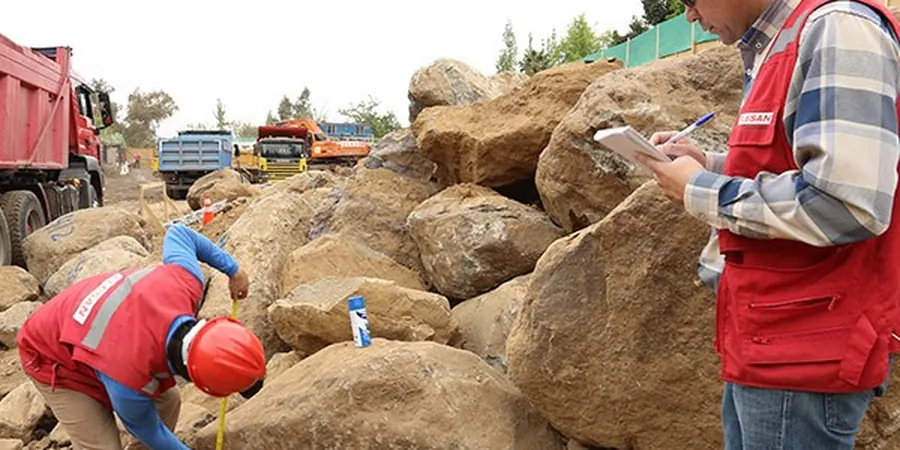
Scope of work in Newcastle
Procedure video
Critical ground factors in Newcastle
A common mistake on Newcastle brownfield sites is running a full foundation design on index tests alone, skipping the triaxial and oedometer stages because the borehole log says 'stiff clay'. Stiff is a descriptor, not a design parameter. In the Ouseburn valley, where made ground overlies soft alluvium, the undrained shear strength can drop by 50% across a single metre of depth, and a footing sized on SPT blow counts alone can settle differentially by 40 mm or more before the superstructure frame is even complete. Another classic error: assuming the glacial till is impermeable. It is not. Fissures and sand lenses give it a bulk permeability that can sustain groundwater flow into excavations, and misjudging that turns a straightforward cut into a dewatering operation. Detailed soil mechanics testing, including triaxial shear strength measurement and consolidation history from oedometer curves, catches these issues early, when the foundation geometry is still on the drawing board and the cost of a redesign is zero.
Our services
The soil mechanics study feeds directly into foundation engineering, and the testing programme is tailored to the geological unit you are building on. Three core service modules cover the typical Newcastle ground profile.
Strength and compressibility testing
Consolidated-undrained and drained triaxial tests on 100 mm diameter specimens, plus incremental oedometer tests, to deliver φ', c', Cc, and cv for settlement and bearing capacity calculations under Eurocode 7.
Index and classification testing
Atterberg limits, particle size distribution by wet sieving and hydrometer, moisture content, and bulk density, all run to BS 1377 methods and reported with the BS 5930 soil description sheet.
Chemical and durability analysis
pH, sulphate content, organic content, and BRE SD1-based assessment of concrete aggressivity, particularly relevant on the coal measure-derived made ground that blankets much of the city centre.
Q&A
How much does a full soil mechanics study cost for a Newcastle residential project?
For a typical single-dwelling site in Newcastle, a soil mechanics study including borehole drilling, sampling, Atterberg limits, particle size distribution, triaxial testing, and oedometer consolidation runs between £2,540 and £3,750. The final figure depends on the number of exploratory holes, the depth to competent stratum, and how many strength tests are needed to satisfy the building control submission.
Which British Standards govern soil mechanics testing for foundation design?
The primary standard is BS 5930:2015+A1:2020 for the investigation framework and soil description. Laboratory testing methods follow BS 1377:2018 (Parts 1 through 9). The design itself is governed by Eurocode 7, specifically BS EN 1997-2:2007 for ground investigation and BS EN 1997-1:2004+A1:2013 for general geotechnical design rules.
How long does it take to get soil mechanics test results back from the lab?
Index tests like moisture content and particle size distribution can be reported within 3 to 5 working days. Triaxial and oedometer tests take longer because of the slow shearing and consolidation stages: a consolidated-undrained triaxial suite with three effective confining pressures typically reports in 10 to 15 working days, and incremental oedometer tests in about the same timeframe. We schedule the programme so that the index results arrive first and guide the strength testing.
What soil units in Newcastle give the most variable mechanics results?
The alluvium along the Tyne corridor and the made ground over Coal Measures are the most variable. Alluvial deposits can switch from loose silty sand to soft laminated clay within a single borehole, giving friction angles from 18 to 32 degrees and undrained strengths from 20 to 100 kPa. Made ground often contains old mine waste, ash, and brick rubble, producing erratic compaction and compressibility. A dense sampling grid and redundant testing are the only way to bracket this variability with confidence for foundation design.