Ground investigation in Newcastle upon Tyne forms the essential first stage of any construction or civil engineering project, providing a detailed understanding of the subsurface conditions that will influence design, cost, and long-term performance. This category encompasses a comprehensive range of intrusive and non-intrusive techniques, from desk studies and walkover surveys to boreholes, trial pitting, and in-situ testing such as the Cone Penetration Test. In a city undergoing significant regeneration — with major developments along the Quayside, the Stephenson Quarter, and numerous infrastructure upgrades — a robust site investigation is not merely a regulatory checkbox but a critical risk management tool. It uncovers potential hazards like mine workings, contaminated land, or variable ground conditions that could otherwise lead to costly delays or structural failures.
Newcastle's geological setting is dominated by the Carboniferous Coal Measures, a layered sequence of sandstones, mudstones, siltstones, and historically important coal seams that have been extensively worked since medieval times. Overlying these solid strata, much of the city centre and river corridors are blanketed by Quaternary glacial and post-glacial deposits, including stiff boulder clays, sands, and gravels, as well as alluvial silts and peats along the Tyne Valley. This complex geology creates a challenging environment where abandoned mine entries, shallow pillar-and-stall workings, and variable drift thickness demand a carefully designed investigation strategy. The legacy of heavy industry has also left pockets of made ground and contamination, particularly in former shipbuilding, engineering, and riverside industrial zones, making ground investigation indispensable for safe redevelopment.
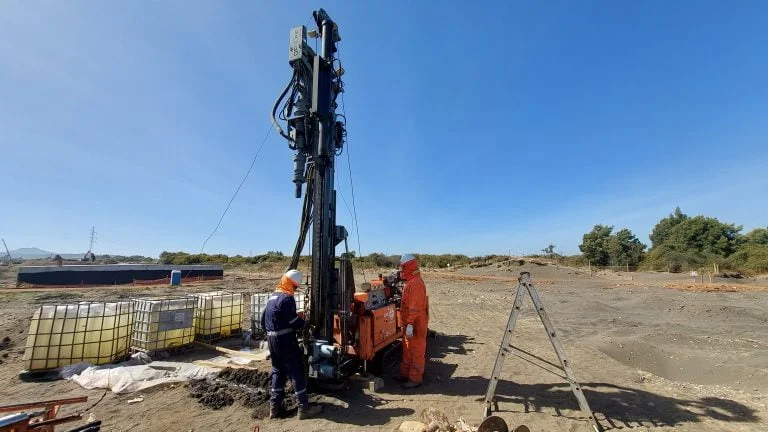
All investigation work in Newcastle must comply with the UK's robust regulatory framework, principally British Standard BS 5930:2015+A1:2020, the code of practice for ground investigations, which sets out the requirements for planning, execution, and reporting. Depending on the project, other key standards apply, including Eurocode 7 (BS EN 1997) for geotechnical design, BS 10175 for contaminated land investigation, and the Environment Agency's Land Contamination Risk Management guidance. Local authority planning conditions, often informed by Northumbrian Water and the Tyne and Wear Fire and Rescue Service, frequently mandate phased investigations where previous industrial or mining use is suspected. Adherence to these standards ensures that data gathered through techniques like the CPT test is reliable, comparable, and legally defensible.
The range of projects requiring thorough investigation in Newcastle is vast. High-rise commercial and residential schemes on challenging urban brownfield sites demand deep boreholes and sophisticated testing to assess bearing capacity and settlement. Infrastructure projects, such as the ongoing upgrades to the Tyne and Wear Metro and highways improvements, rely on investigation to manage earthworks and structural foundations. Even smaller-scale domestic extensions or basement conversions in areas like Jesmond or Gosforth may uncover old mine workings or running sands, requiring targeted investigation to prevent collapse or water ingress. A well-executed investigation, integrating methods like the Cone Penetration Test with laboratory analysis, provides the data engineers need to design safe, sustainable, and cost-effective solutions tailored to Newcastle's unique ground conditions.
Available services
Questions and answers
What does a ground investigation in Newcastle typically involve?
A ground investigation typically follows a phased approach: a desk study reviewing historical maps and geological records, a walkover survey, and then intrusive fieldwork. This fieldwork includes boreholes, trial pits, and in-situ testing such as the Cone Penetration Test to assess soil strength, followed by laboratory testing and a factual or interpretative report.
Why is a ground investigation so important for sites with a mining history in Newcastle?
Much of Newcastle is underlain by shallow coal seams and abandoned mine workings, which can collapse or cause subsidence decades after extraction ceased. A thorough investigation using rotary drilling and geophysics is essential to locate voids, assess pillar stability, and design remedial grouting or reinforced foundations to protect the new structure.
Which British Standards govern ground investigation work in the UK?
The primary standard is BS 5930:2015+A1:2020, which provides the code of practice for site investigations. This is used alongside Eurocode 7 (BS EN 1997) for geotechnical design and BS 10175 for investigating potentially contaminated sites, ensuring all fieldwork, sampling, and reporting meet rigorous quality and safety requirements.
When is a ground investigation required for a construction project in Newcastle?
A ground investigation is required for almost all construction projects, from major commercial developments to domestic extensions, especially where planning conditions demand it. It is critical on brownfield sites, in mining areas, near rivers, or anywhere ground conditions are unknown, to satisfy building regulations and structural design requirements.